
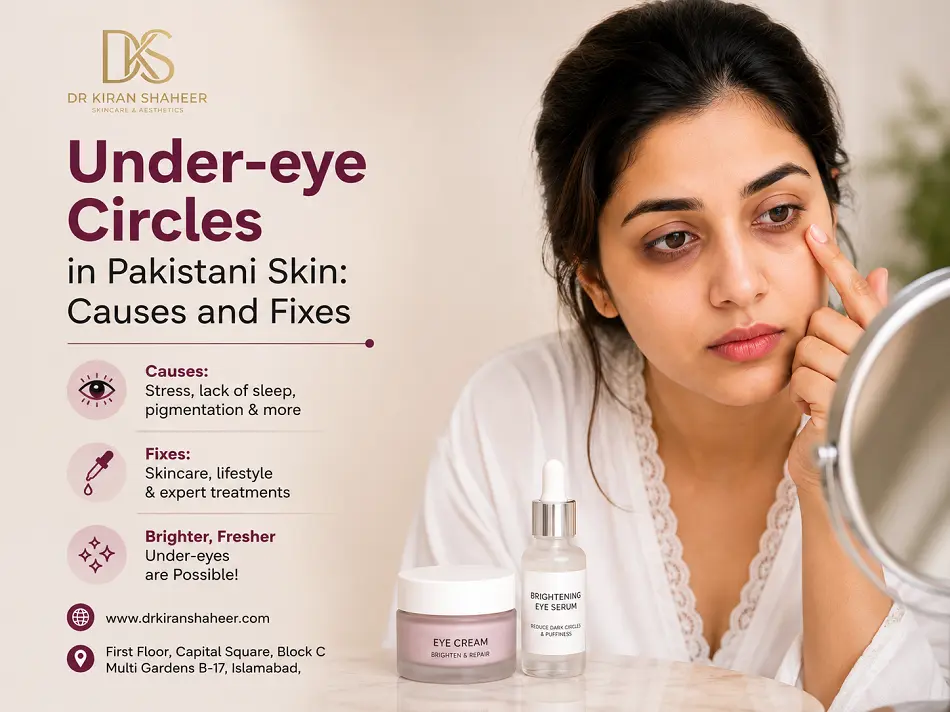
Dark circles are one of the most common complaints I hear at my clinic. Patients come in tired of looking tired. They have tried cold spoons, potato slices, expensive creams and still nothing works. The reason most treatments fail is simple: people treat the symptom without knowing the cause. Under-eye circles in Pakistani skin are not always what they look like. Some are pigmentation. Some are shadows from fat loss. Some are blood vessels showing through thin skin. Each type needs a different fix. This guide tells you what is actually happening under your eyes and what you can do about it.
Why Pakistani Skin Gets Dark Circles More
Pakistani skin has higher melanin levels. This is what gives us our warm skin tone. But it also means our skin responds to sun exposure, irritation, and inflammation with more pigmentation than lighter skin types.
The under-eye area has the thinnest skin on the face. That thin skin, combined with our melanin activity, makes dark circles appear deeper and harder to treat. Add Pakistan’s intense year-round sun and the fact that most people never apply SPF under their eyes, and the problem compounds over time.
The 4 Types of Under-Eye Circles
Not all dark circles are the same. Identifying your type is the most important first step.
Pigmentation
Brown or grey in colour. Flat appearance. Stays the same whether you are tired or rested. Caused by excess melanin from sun exposure, rubbing, or inflammation.
Vascular
Blue or purple tone. Blood vessels showing through thin under-eye skin. Looks worse in the morning. Triggered by poor sleep, dehydration, and weak circulation.
Structural
Not a colour, a shadow. A deep tear trough or hollow under the eye creates a dark shadow. No cream fixes this. Needs a clinic consultation for fillers or collagen treatment.
Mixed
Most adults over 30 have a combination of pigmentation and hollowing. This is why a single product rarely solves the whole problem.
Common Causes in Pakistani Patients
Understanding what caused your dark circles helps you stop them from getting worse.
- Sun exposure without eye protection. UV rays directly stimulate melanin production around the eyes. Most people in Pakistan never apply SPF here.
- Rubbing the eyes. Rubbing causes chronic inflammation. Inflammation triggers melanin release. Many people rub out of habit or because of allergies.
- Lack of sleep. Poor sleep increases fluid retention and slows circulation. Both make vascular dark circles worse overnight.
- Nutritional deficiencies. Iron deficiency is very common in Pakistani women. Vitamin B12 and Vitamin C deficiencies also contribute significantly.
- Allergies. Allergic rhinitis causes blood vessel dilation around the eyes. Seasonal allergies in Islamabad and Rawalpindi are a major hidden trigger.
- Genetics. If your parents or siblings have dark circles, your risk is higher. Skin structure and melanin tendencies are inherited.
- Dehydration. The under-eye area shows dehydration faster than anywhere else. Dehydrated skin appears thinner and darker.
What Actually Works
Treatment depends entirely on the type. Here is what the evidence supports.
For Pigmentation Dark Circles
Vitamin C inhibits the enzyme that produces melanin. Applied consistently under the eye, a stable Vitamin C formula reduces brown pigmentation over 8 to 12 weeks. Niacinamide works on a similar pathway and is one of the best-tolerated ingredients for this area.
Daily SPF is non-negotiable. Without sun protection, no depigmenting ingredient holds its results. You must apply SPF under the eyes every single morning.
The EyeOra Roll-On contains active ingredients that target both pigmentation and puffiness. The cooling metal applicator helps reduce overnight fluid build-up when used in the morning. For pigmentation-type dark circles, I recommend using it morning and night.
For Vascular Dark Circles
Caffeine constricts blood vessels and reduces fluid accumulation. Eye products with caffeine work best in the morning. Sleep 7 to 8 hours with a slightly elevated pillow to reduce overnight pooling. Drink at least 2 to 2.5 litres of water daily.
If your circles worsen in spring or dusty environments, get your allergies assessed. Treating the allergy reduces the vascular response around the eyes significantly.
Sun protection matters here too. Apply your SPF under the eyes every morning. UV damage worsens pigmentation and thins the skin further over time. Use a broad-spectrum SPF 50 or higher. Browse sunscreens recommended by Dr. Kiran →
For Structural Dark Circles
No topical treatment meaningfully corrects a tear trough hollow. If your dark circles look like a shadow rather than a colour, book a clinic consultation. Hyaluronic acid filler or microneedling to stimulate collagen are the right options for this type.
A Simple Daily Routine
This is what I recommend to most patients with pigmentation or vascular dark circles.
Morning
Night
Do this consistently for 8 to 12 weeks. Most pigmentation and vascular cases show clear improvement in this window.
When to See a Doctor
See a doctor if your dark circles came on suddenly, are accompanied by puffiness that does not go away, or if the skin texture has changed. Sudden under-eye changes can sometimes point to thyroid issues, kidney problems, or significant nutritional deficiency. A blood panel rules these out quickly.
See a doctor if home care has not improved your circles after 12 weeks of consistent use. You may have a mixed or structural type that needs a clinical approach.
Frequently Asked Questions
Can dark circles go away permanently?
Does sleep really make a difference?
Are home remedies like potato or cucumber effective?
Can men get dark circles from the same causes?
How long does it take for an eye serum to work?
Is it safe to apply retinol under the eyes?
The Bottom Line
Dark circles in Pakistani skin are common but not inevitable. Most people never find the right treatment because they do not know which type they have. Identify your type, address the root cause, protect your skin from the sun every day, and use active ingredients consistently for 8 to 12 weeks. That is the approach that actually works.
Recommended by Dr. Kiran Shaheer
Not sure which product is right for you?
Browse doctor-recommended skincare for every skin concern.
Shop the full range →