
You have bought sunscreen before. Maybe more than one bottle. It sat on your shelf half used because it left a grey film on your face, or felt too heavy in Islamabad’s summer heat, or simply did not stop your skin from getting darker patches after a few hours outside. If any of this sounds familiar, the problem was never your discipline. It was the formula. Your skin tone changes how UV rays affect you, and it changes which sunscreen will actually sit well on your face. In clinic, I get asked almost every day which sunscreen suits which skin tone, and why the same product that works for a friend leaves a white cast on someone else. This guide answers that in plain language, based on what I recommend to my own patients across Islamabad and Rawalpindi.
Why Skin Tone Changes Your Sunscreen Choice
Melanin gives some natural protection from the sun, but it is not enough on its own. Every skin tone needs daily SPF, from the fairest to the deepest brown. What changes is the type of sunscreen that suits you. Mineral sunscreens, the ones with zinc oxide or titanium dioxide, often leave a white or grey cast on medium to deep skin tones. This is the number one complaint I hear from patients in Pakistan. Chemical and hybrid sunscreens usually blend in better and feel lighter in our heat and humidity.
Pakistan also has one of the highest UV index readings in the world. In cities like Islamabad, Lahore and Karachi, the UV index often crosses 10 during summer. At this level, unprotected skin can start to burn within fifteen minutes. This is why generic sunscreen advice written for cooler, drier climates does not always work here. Your sunscreen has to handle heat, sweat and sun intensity, not just UV rays on paper.
Find Your Skin Tone and Its Sunscreen Needs
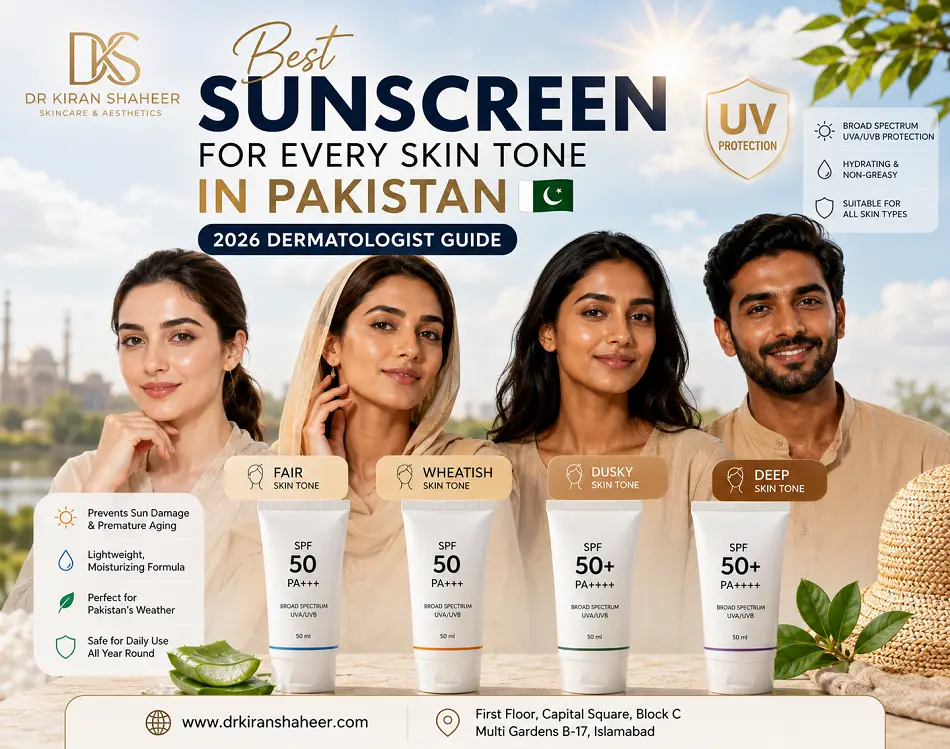
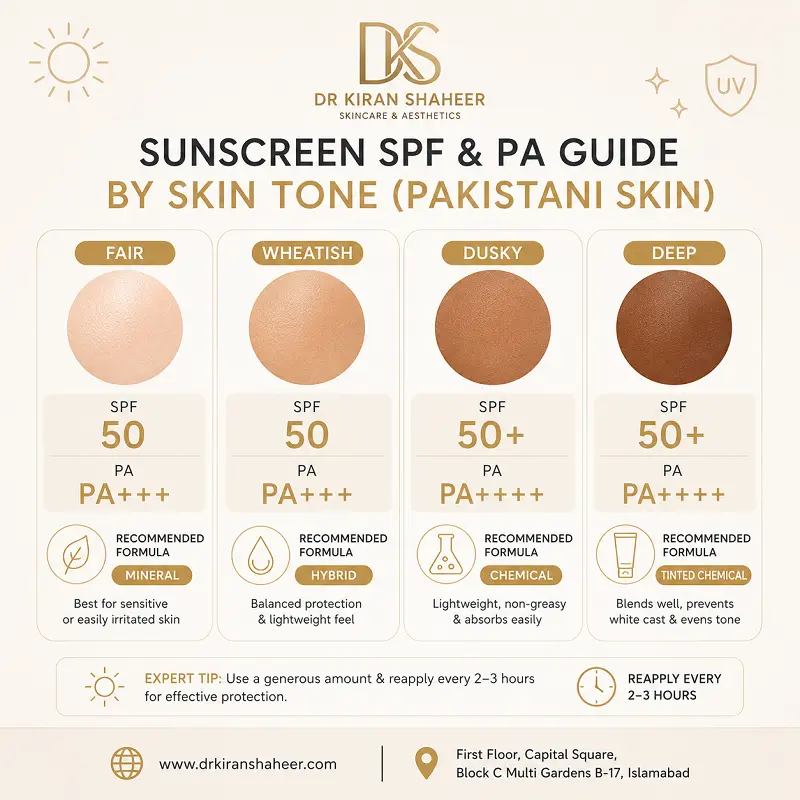
I group skin tones into four simple categories that match what I see most in my clinic. Use this as a starting point, not a strict rule. Your skin type, whether oily, dry or sensitive, also plays a role, which we cover in the next section.
Fair or Light Skin
Fair skin burns quickly and shows redness within minutes of sun exposure. If this is you, look for SPF 50 or higher with PA+++ or PA++++. Mineral or hybrid sunscreens work well here since white cast is less noticeable on lighter tones. Avoid heavy, greasy formulas that trigger breakouts in our humidity.
Wheatish or Medium Skin
This is the most common skin tone I see in Pakistan. Wheatish skin tans instead of burning right away, but it is still prone to sun spots and uneven tone over time. SPF 50 with a hybrid or chemical formula usually gives the best balance of protection and a natural finish.
Dusky or Olive Skin
Dusky skin is where white cast becomes a real problem. Pure mineral sunscreens often sit on top of the skin and look ashy. Chemical or hybrid sunscreens with a sheer or tinted finish blend in far better. This skin tone is also more prone to visible dark patches after sun exposure, so consistency matters more than the brand you choose.
Deep or Dark Brown Skin
Deep skin tones have more natural melanin, but this does not mean sunscreen is optional. UV damage still happens, and it often shows up as stubborn hyperpigmentation rather than sunburn. Tinted chemical sunscreens with antioxidants like vitamin C or niacinamide give both protection and an even finish without any cast.
Sunscreen by Skin Type, Not Just Skin Tone
Skin tone tells you about cast and pigmentation risk. Skin type tells you about texture and comfort. Both matter when picking the right product.
If your skin is oily or acne-prone, choose a gel or water-based sunscreen that is oil-free and non-comedogenic. Heavy creams will clog pores and cause breakouts within days. For this skin type I often recommend UV Matt SPF 60 Broad Spectrum Sunscreen, since its matte, anti-tan finish suits oily and sweat-prone skin through Pakistan’s summer. If your skin is dry, look for a sunscreen with hyaluronic acid or ceramides, since dry skin needs hydration along with sun protection. Our Anti-UV Cream is a good fit here, as it protects while keeping the skin barrier comfortable rather than tight or flaky. Sensitive skin does best with fragrance-free, mineral or gentle hybrid formulas that will not sting or trigger redness.
If you deal with melasma or stubborn pigmentation, sunscreen is not optional, it is treatment. Sun exposure is one of the biggest triggers for melasma to darken. I recommend SPF 50 or higher, reapplied through the day, alongside a targeted pigmentation product. You can browse our Melasma Treatment range for options I recommend in clinic, including the White Balance Cream for evening out tone.
How to Read a Sunscreen Label
Two numbers matter most on any sunscreen label. SPF measures protection against UVB rays, the ones that cause sunburn. PA measures protection against UVA rays, the ones that cause premature aging and pigmentation. For Pakistan’s climate, I recommend SPF 50 or higher with at least PA+++ for daily use. Broad spectrum on the label means the sunscreen covers both UVA and UVB, which is a must, not an extra.
Water resistance is helpful if you sweat a lot during the day, but no sunscreen is fully sweat proof. Reapplication is still needed, especially if you are outdoors for long hours.
How to Apply Sunscreen the Right Way
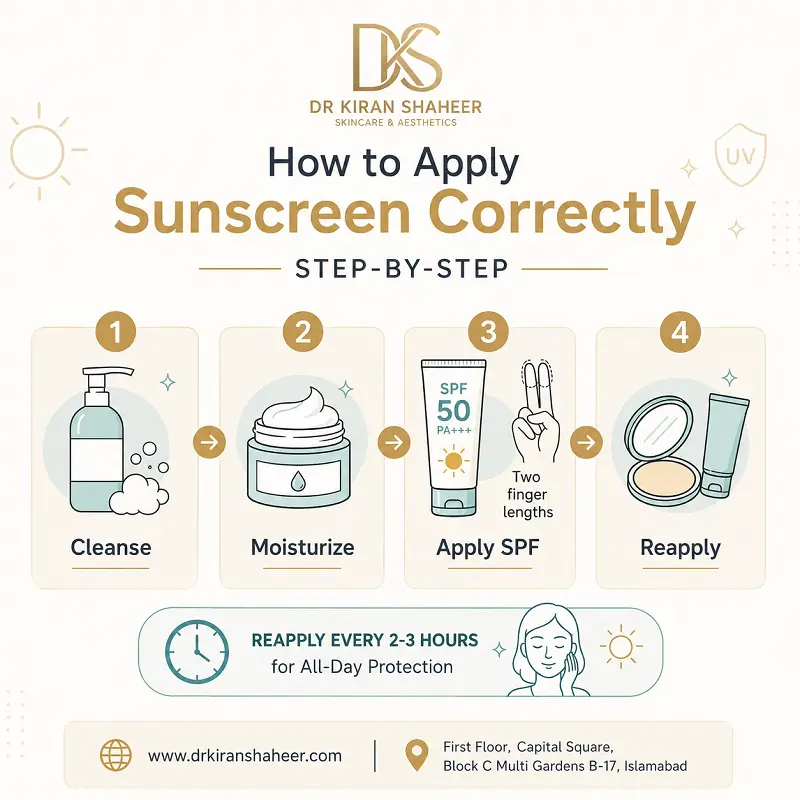
Most people under apply sunscreen, which means they are not getting the SPF printed on the bottle. A simple rule is two full finger lengths of product for the face and neck. Apply it as the last step of your morning skincare, after moisturizer and before makeup. Reapply every two to three hours if you are outdoors, and always reapply after heavy sweating.
Sunscreen is a daytime product. It protects against sunlight, so wearing it at night has no benefit. But it should be worn every day, including cloudy days and days spent mostly indoors, since UV rays pass through windows and clouds too.
Doctor’s Sunscreen Picks by Skin Concern
These are products I recommend most often in clinic, based on skin tone and concern rather than marketing claims.
- Unsun Sunblock with Glutathione, best for wheatish to dusky skin dealing with uneven tone, since it combines sun protection with a brightening ingredient.
- UV Matt SPF 60 Broad Spectrum Sunscreen, best for oily and sweat-prone skin, with a matte, anti-tan finish built for Pakistan’s heat.
- Anti-UV Cream, best for dry or normal skin that needs daily UV protection without a tight or heavy feel.
- White Balance Face Wash, a good companion product for pigmentation-prone skin as part of a full routine alongside daily sunscreen.
- White Balance Cream, useful at night to support the work your daytime sunscreen is doing against pigmentation.
- For the full range suited to your tone, visit our Sunscreens collection.
If acne is your main concern alongside sun protection, pair your sunscreen with a gentle routine like the one in our guide on skin cycling for acne-prone skin. If you are also starting retinol, sunscreen becomes even more important since retinol increases sun sensitivity. Read our retinol serum guide for beginners for how to combine both safely.
Frequently Asked Questions
Do people with dark skin need sunscreen?
Yes. Melanin gives some natural protection but does not block UV damage completely. Dark skin still develops sun damage, and it often appears as dark patches rather than sunburn.
What SPF is best for Pakistan’s climate?
SPF 50 or higher with PA+++ or above is the safest daily choice, given how high the UV index gets in Pakistani cities during summer.
Can sunscreen help with melasma?
Yes. Sun exposure is one of the main triggers that darkens melasma. Daily broad spectrum SPF 50 sunscreen is a core part of any melasma treatment plan, not an optional add-on.
Should I choose mineral or chemical sunscreen for oily, dusky skin?
Chemical or hybrid sunscreens usually work better for oily, dusky skin, since pure mineral formulas tend to leave a white or grey cast and can feel heavier in humid weather.
Should I wear sunscreen indoors?
Yes, especially if you are near windows. UV rays pass through glass and can still cause pigmentation and early aging over time.
Final Word from Dr. Kiran Shaheer
The best sunscreen is the one that matches your skin tone, your skin type, and your daily routine closely enough that you will actually use it every single day. Start with the tier that matches your tone, check the SPF and PA rating, and apply it correctly each morning. If you are unsure which product fits your skin, you can always book a consultation or browse our doctor-recommended sunscreen range built for Pakistani skin and climate.